How to Hang Art on a Canvas Above a Sideboard
Hanging art on a canvas above a sideboard works best when the artwork and furniture feel like one composition. The canvas needs enough presence to anchor the wall, but enough breathing room to avoid crowding lamps, ceramics or the objects you use every day.
Start with the sideboard rather than a fixed eye-level rule. Its width, height and position give you more useful reference points than the ceiling does. From there, you can choose a suitable canvas, test the placement and select hardware that matches both the artwork and your wall.
A maritime subject adds another layer: a sense of travel and history without requiring a room full of nautical accessories.
Size art on a canvas to suit your sideboard
Measure the full width of the sideboard, then consider an artwork or arrangement approximately two-thirds to three-quarters of that width. This is a decorating starting point, not a structural rule or a requirement to buy a particular size.
| Sideboard width | Suggested overall artwork width |
|---|---|
| 48 inches | 32 to 36 inches |
| 60 inches | 40 to 45 inches |
| 72 inches | 48 to 54 inches |
| 84 inches | 56 to 63 inches |
These measurements refer to the outside edges of the finished piece, including any frame. For multiple works, measure the complete arrangement, including the gaps.
When choosing art on a canvas, check the available dimensions rather than estimating size from a product photograph. A piece that looks substantial on a screen can feel small above a long cabinet.
Width is only part of the decision. A horizontal canvas often suits a long, low sideboard, while a square or vertical piece can work above a narrower cabinet. Leave visible wall space around the artwork so it does not appear squeezed between a doorway, shelving or a corner.
Set the height from the furniture, not the ceiling
Begin by testing a gap of 6 to 10 inches between the sideboard top and the bottom of the artwork. Adjust it to suit the cabinet height, canvas proportions and objects that will remain on the surface.
For example, imagine a sideboard that is 32 inches high and a finished canvas measuring 48 inches wide by 30 inches high. With an 8-inch gap, the canvas bottom sits 40 inches above the floor and its top reaches 70 inches. Its center is therefore 55 inches high.
That can look more connected to the furniture than raising it simply to meet a general eye-level guideline. These are illustrative dimensions, not the specifications of a particular Transit Art product.
The right position for art on a canvas also depends on how you see it. Check the arrangement from the doorway, from a nearby chair and while standing beside the cabinet. A dining room sideboard is often viewed seated, so the standing view should not be your only test.
If the cabinet is unusually tall, reduce the gap where practical rather than pushing the canvas toward the ceiling. Keep enough clearance to use the surface without knocking the artwork.
Give the artwork a story: M/S Västan
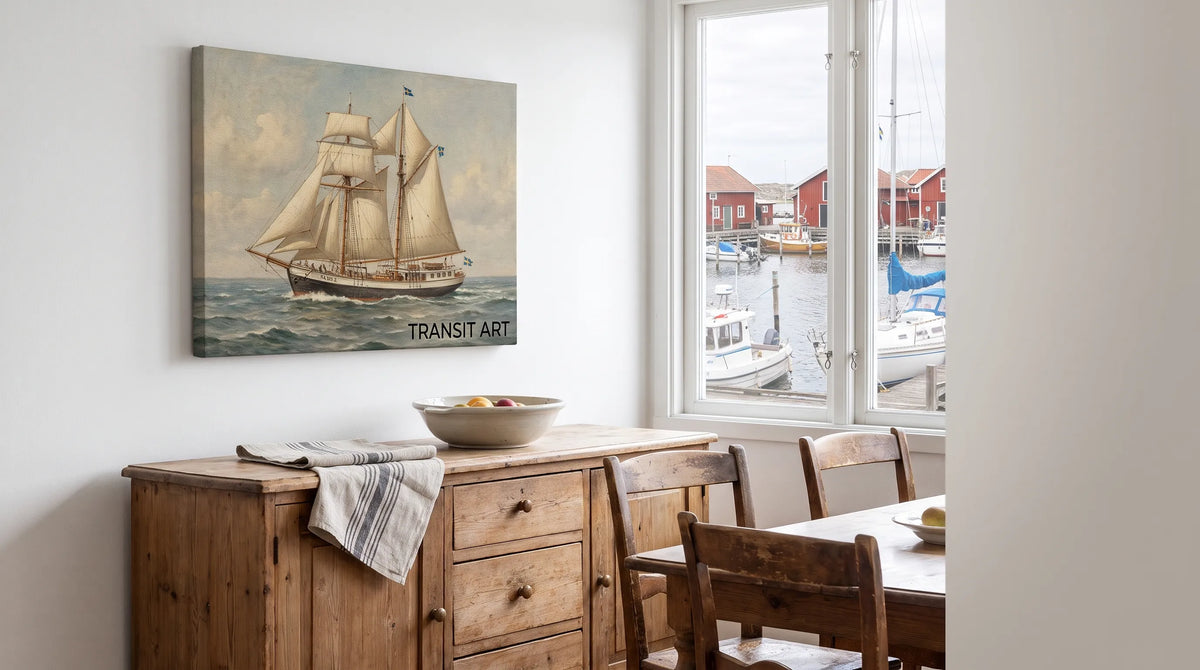
Transit Art’s M/S Västan - canvas features a Swedish coastal vessel dating to 1900, illustrated by Swedish artist Sune Envall. The vessel remains in service in the Swedish archipelago, connecting the subject to a living transport tradition rather than a purely nostalgic scene.
That history gives the work particular appeal for boat enthusiasts, travelers and anyone with a connection to Sweden’s coastal landscapes. It also offers a quieter way to display an interest in transport than filling a room with themed objects.
Above a sideboard, the vessel becomes a subject worth pausing over. Guests can appreciate it as an illustration first, then discover the history behind it. For a gift buyer, that combination of visual interest and personal association can make the choice feel considered.
Choosing art on a canvas around a meaningful subject helps the room feel personal, even when the surrounding furniture is simple. Check the product listing for current size options and mounting information before planning the final installation.
Connect the maritime subject to your interior
A boat canvas does not require anchors, rope ornaments or blue-and-white stripes around it. In a Scandinavian-inspired room, let the subject sit alongside wood, restrained ceramics and uncluttered surfaces. The connection comes through materials and simplicity rather than matching motifs.
For a modern sideboard with clean lines, keep nearby accessories equally clear in shape. With an older wooden cabinet, allow differences in texture and age to contribute to the arrangement.
Choose accent colors after studying the artwork itself. Repeat one existing tone in a vase or textile rather than assuming every maritime image needs a navy backdrop. Transit Art’s guide to bringing coastal character indoors with boat artwork explores this approach beyond overtly nautical styling.
Test the arrangement before making holes
Cut a paper template to the canvas’s finished outside dimensions. Position it above the sideboard using a wall-safe method suitable for your paint or finish, testing any removable tape in an inconspicuous place first.
Put the lamps and decorative objects you intend to keep back on the cabinet. This reveals whether a lampshade interrupts the main subject or a tall vase makes the composition feel crowded.
When planning art on a canvas, a full-size template is more useful than a small sketch because it shows the actual relationship between the furniture, wall and artwork. Leave it in place long enough to judge the arrangement in daylight and evening light.

Mount the canvas safely
Check the construction and wall type
Before buying fixings, establish the artwork’s weight, construction and intended hanging method. Canvas describes the image support, not a guarantee that every piece arrives with the same stretcher frame or hardware.
Use the supplied mounting instructions where available. Do not screw through the canvas fabric or attach hardware to an unsuitable part of the frame.
The wall matters just as much. A fixing for drywall is not automatically suitable for brick, plaster or another surface. Select hardware rated for the artwork’s weight and compatible with the wall construction, following the fixing manufacturer’s instructions. Where appropriate, secure the piece to a stud or suitable structural support.
Check for concealed wiring and plumbing before drilling. If the wall construction is uncertain or the artwork is heavy, professional installation is the safer choice.
Transfer the measurements to the fixing points
Mark the intended top edge of the canvas, then measure the distance from that edge to the actual hanging point. Subtract this drop to locate the wall fixing. If the artwork hangs on wire, account for its position under tension rather than measuring it while slack.
For art on a canvas designed to use two attachment points, measure their spacing and use a level to transfer both positions accurately. Do not assume the attachments are perfectly symmetrical without checking.
Install the appropriate fixings, hang the artwork and confirm that every attachment is fully engaged before releasing its weight. Check the level again once it is supported.
Adhesive products are not a universal substitute for mechanical fixings. Use them only when their instructions explicitly suit the artwork, surface, weight and installation conditions. A textured wall or unsuitable paint finish can change how reliably they hold.
Style the sideboard without competing with the canvas
Once the artwork is secure, rebuild the arrangement gradually. Start with the objects you need, such as a lamp or serving tray, then add decorative pieces only where they improve the balance.
A tall object at one end can provide a counterpoint to a horizontal canvas. Keep its silhouette away from the most important part of the image. Lower objects can sit nearer the center without dividing the view.
Leave some of the sideboard surface empty. That open space helps the canvas remain the focal point and keeps the cabinet useful. You do not need matching objects at both ends, although a symmetrical arrangement can suit a formal dining room.
Lighting should make art on a canvas comfortable to view rather than create a bright reflection or a concentrated hot spot. Test adjustable lamps from normal viewing positions and keep heat-producing fittings at an appropriate distance.
Avoid prolonged direct sunlight where possible. For ongoing care, follow the print’s instructions and use Transit Art’s guidance on dusting canvas artwork without damaging its surface before attempting cleaning.
Frequently asked questions
Should a canvas be centered over the sideboard or on the wall? Usually, center it over the sideboard. This connects the artwork to the furniture below. If the cabinet forms part of a larger built-in arrangement, consider that whole composition before choosing the centerline.
Can a canvas be wider than the sideboard? It can, but the effect is more dominant and needs generous surrounding space. A narrower artwork is generally an easier starting point when you want the cabinet and canvas to read as a balanced pair.
Can I lean art on a canvas on the sideboard instead? Leaning is possible for some pieces, but it introduces slipping and tipping risks. Follow the artwork’s support requirements and use appropriate restraint where needed, especially around children, pets or frequently used surfaces. Secure wall mounting often leaves more usable cabinet space.
Does a canvas need an additional frame? That depends on its construction and the finish you prefer. Check whether it is supplied stretched, framed or in another format. If adding a frame, use its final outside dimensions when planning the layout.
Create a focal point with room to breathe
A successful sideboard display starts with proportion, a tested hanging height and secure mounting. The styling can stay simple when the artwork has a subject you genuinely enjoy.
For admirers of Swedish maritime history, M/S Västan offers that personal connection. Give the canvas enough wall space, keep nearby objects selective and let the vessel’s story provide the character.