Article: How to Choose High Quality Art Prints for a Car Lover's Gift
How to Choose High Quality Art Prints for a Car Lover's Gift
A search for “art prints high quality” can turn up plenty of attractive car posters. Choosing one as a gift takes a more personal test: does it tell the right automotive story, suit the recipient’s room and come in a format they can actually display?
The strongest gifts connect enthusiasm with everyday surroundings. A Morgan racing scene might recall weekends at British circuits, while an Auto Union Grand Prix car could appeal to someone fascinated by prewar engineering. Materials matter, but so does recognizing what makes a particular subject meaningful. Here is how to bring those decisions together without guessing about print specifications or the recipient’s taste.
Start with their automotive interests
“Car lover” covers very different interests. Someone who restores British sports cars may feel little connection to modern supercars. A Grand Prix history reader might prefer an evocative racing scene to a portrait of a road car, even a famous one.
Look for clues in the cars they discuss, the events they attend and the books they keep. Distinguish between a favorite manufacturer and a favorite aspect of motoring: engineering, competition, craftsmanship or memories of a particular journey.
Then consider where the gift will live. An expressive racing composition can make sense in a personal office, while a shared living room may call for a quieter arrangement. A photograph of the intended wall, taken with permission, is more useful than guessing its dimensions.
The best starting point is a specific connection, not the most recognizable badge. That connection gives the gift a story you can explain in a few handwritten lines.
What to check when searching for “art prints high quality”
An online preview shows the artwork, but it cannot establish every aspect of the physical print. Before choosing a size or adding a frame, check what the listing actually confirms.
| Check | Why it matters for a gift | What not to assume |
|---|---|---|
| Print format | Paper and canvas have different presentation needs | Every artwork is available in every format |
| Available dimensions | The piece needs to suit the wall and framing plan | The room photograph shows the size you selected |
| Material description | Clear specifications help you compare options | “Premium” automatically means archival |
| Frame inclusion | An unframed poster needs an additional display plan | A frame in a styled photograph is included |
| Delivery information | Gift timing depends on the destination and order | An estimated arrival is a guaranteed deadline |
Transit Art describes its poster offering as using FSC-certified paper with a gallery-quality finish. Check the individual product and selected variant for the details relevant to your order. FSC certification addresses responsible sourcing; it is not, by itself, a guarantee of fade resistance or archival permanence.
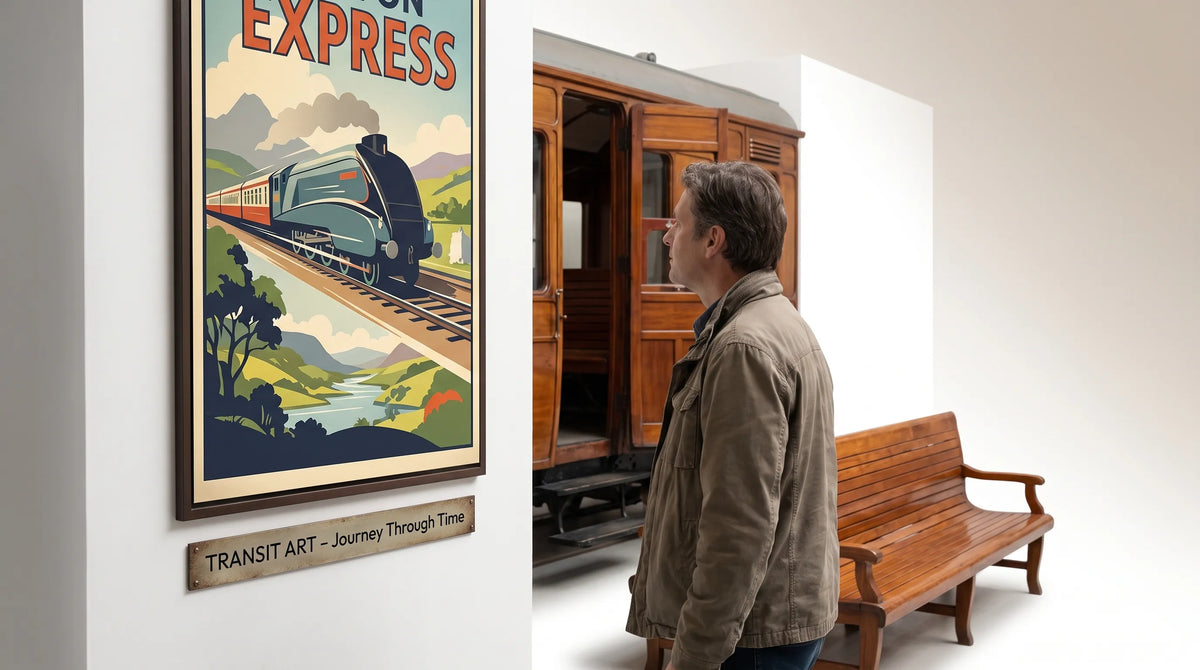
High quality art prints deserve equally thoughtful presentation, but expensive framing is not automatically necessary. A well-proportioned frame and suitable mat can make a carefully chosen poster feel considered. Transit Art’s guide to creating a gallery-quality look with prints on paper explores that relationship in more detail.
Recommended Poster Pairings
For a recipient who enjoys historic motorsport, Morgan Racing Day and German Rivals offer a pairing built around two distinct racing traditions. Their connection is the subject matter rather than a claimed shared location, event or period.
Either artwork can work alone. Give both when you know the recipient has space and would appreciate a broader racing story. Before ordering, compare the current product previews for color balance, orientation and available sizes rather than assuming they will form an identical set.
Morgan Racing Day: British sports-car character
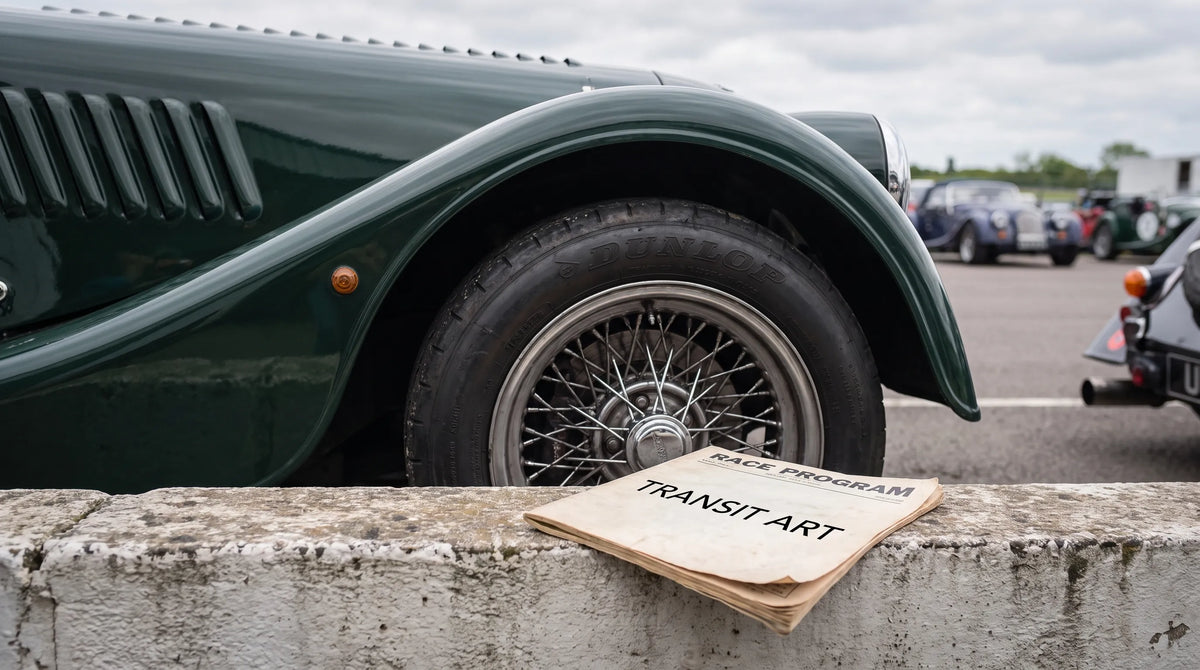
Morgan Racing Day depicts a Morgan on a British racetrack. It is a fitting direction for someone drawn to lightweight sports cars, traditional craftsmanship and the atmosphere of circuit racing.
Morgan’s history began in 1909 with three-wheelers. The four-wheeled Morgan 4/4 followed in 1936, its name referring to four wheels and four cylinders. Competition became another part of the marque’s identity: a Morgan Plus 4 took a class victory at the 1962 24 Hours of Le Mans. These are milestones in the brand’s wider history, not an identification of the particular car pictured in this artwork.
That background helps explain why enthusiasts appreciate Morgan imagery. The appeal extends beyond outright speed to a recognizable approach to sports-car design.
When choosing high quality art prints for a British-car enthusiast, this personal connection can be more meaningful than selecting a more famous marque. Pair it with German Rivals in a study or home office, using consistent framing to connect their different racing subjects.
German Rivals: prewar Grand Prix engineering
German Rivals shows an Auto Union Type D sliding through a curve. It suits a recipient whose interests include early Grand Prix racing, unusual engineering layouts or the development of purpose-built competition cars.
Introduced in 1938, the Type D used a supercharged V12 positioned behind the driver and ahead of the rear axle. That layout makes it an interesting subject for someone who enjoys tracing the development of racing-car design. It belongs to the broader story of Auto Union’s prewar Grand Prix cars, but the different types should not be treated as interchangeable.
A short gift note identifying the Type D and its period gives the recipient something more specific than a generic tribute to “classic racing.” It also shows that you chose the image with their interests in mind.
Alongside Morgan Racing Day, it creates a conversation between British sports-car culture and continental Grand Prix competition. High quality art prints with distinct subjects can still form a cohesive display when the frames, spacing and overall scale are consistent. A reading corner near automotive books is another suitable setting.

Make the artwork belong in the room
Choose the wall before the size
Measure the available wall area and mark the proposed framed dimensions with removable paper templates. Include the frame and mat in those measurements, not just the printed image.
Above a desk or console, the artwork should relate to the furniture beneath it rather than float in an unrelated patch of wall. If you are giving a pair, test the complete arrangement, including the gap between frames. Two individually suitable prints can become too wide when displayed together.
Avoid choosing the largest option simply because it feels more generous. A smaller piece that fits a reading nook can be a better gift than a large print the recipient cannot place.
Connect the frames to the interior
In a restrained Scandinavian-style room, simple wood frames can connect automotive imagery with existing furniture. Slim black frames may suit an office with dark lighting fixtures or metal shelving. Treat these as options to test against the actual artwork and room, not rules attached to a particular car.
High quality art prints do not need a room full of automotive objects to look at home. One racing image beside books, ceramics or a lamp can express the owner’s interests without turning the space into a themed display.
For a shared room, agree on scale and framing before committing to a dominant arrangement. The guide to choosing wall art when your tastes differ offers a useful approach to finding that common ground.
Finish the gift without creating extra work
A poster can be a thoughtful present unframed, particularly when the recipient enjoys choosing their own interiors. The key is to make that choice deliberate rather than leave them uncertain about what to do next.
Before placing the order, settle four practical points:
- Framing: Confirm whether a frame is included and whether the recipient would prefer to choose one themselves.
- Dimensions: Check the selected print size against both the intended wall and any frame you plan to supply.
- Timing: Review current delivery information for the destination, allowing flexibility around important dates.
- Presentation: Add a note explaining why this car, racing tradition or artwork reminded you of them.
If you arrange framing separately, discuss suitable protective materials with the framer and avoid attaching adhesive directly to the image surface. Keep the finished piece out of prolonged direct sunlight and away from damp locations.
The gift note need not become a history lesson. One accurate detail about Morgan’s competition heritage or the Type D’s engine layout, followed by your personal reason for choosing it, is enough.
Frequently Asked Questions
Are paper posters or canvas prints better for a car lover’s gift? Neither is inherently better. Paper offers flexibility through frames and mats, while canvas creates a different surface and presentation. Check which formats the chosen artwork actually offers and consider the recipient’s room.
How can I recognize high quality art prints online? Look for clear material descriptions, available dimensions and useful product photographs. Separate confirmed specifications from broad marketing terms, and ask the seller about anything essential that the listing does not establish.
Should I give one poster or a matching pair? Choose one when you know the recipient’s favorite subject but not their available wall space. A pair works well when you can confirm the dimensions and know they would enjoy a coordinated motorsport display.
What if I do not know their favorite car? Start with a racing era, national motoring tradition or event they enjoy. A relevant story is usually a stronger basis for a gift than guessing a favorite model.
Choose a gift with a reason behind it
A successful automotive print combines an interesting subject, clearly described materials and a place in the recipient’s home. Morgan Racing Day and German Rivals offer two different ways into motorsport history. Explore Transit Art with a particular person and wall in mind, then let that connection guide the final choice.