Article: How Premium Canvas Prints Elevate Automotive Interiors
How Premium Canvas Prints Elevate Automotive Interiors
For car lovers and design-conscious homeowners, premium canvas prints have a particular strength in automotive interiors: they make machinery feel architectural rather than merely decorative. Here, automotive interiors does not mean the inside of a car. It means living rooms, garages, studios, hallways and home offices shaped by the culture of motoring, from early Grand Prix dust to sculptural Bugatti silhouettes.
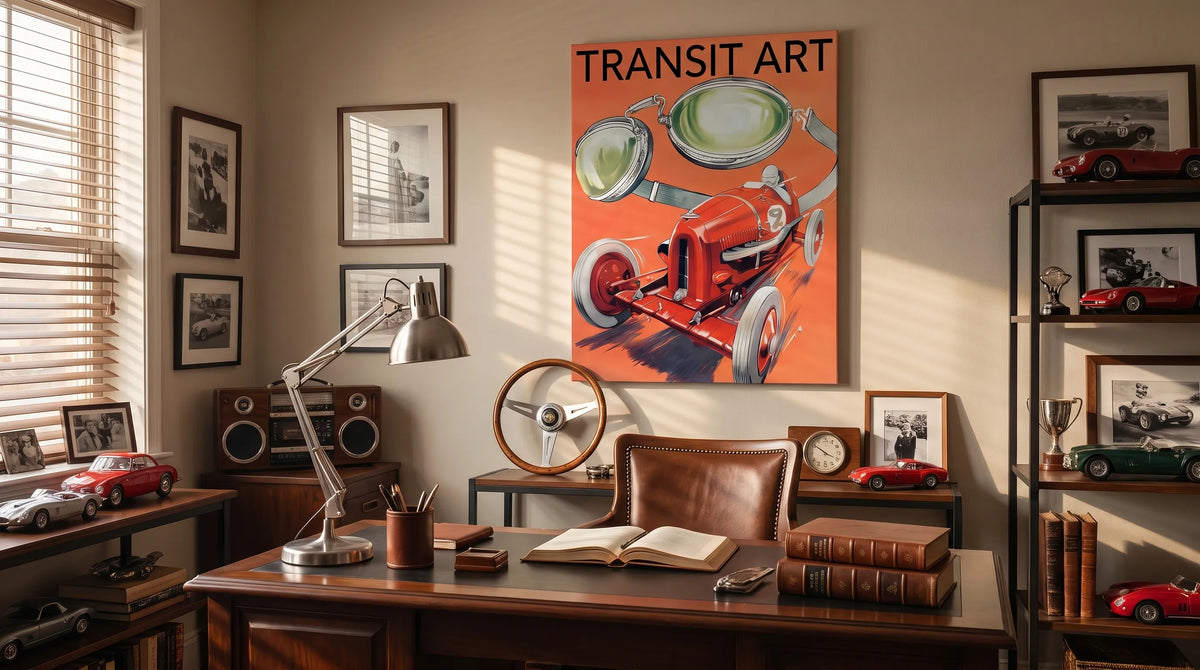
Automotive art works because cars are already designed objects. A grille, wheel arch, cockpit line or racing number can carry as much visual tension as a piece of modern graphic art. When that subject is printed at a generous scale with rich texture, it becomes a focal point that says something personal without overwhelming the room.
Why premium canvas prints work so well in automotive interiors
The appeal of premium canvas prints starts with texture. Canvas softens the surface of an image, giving cars, garages and racing scenes a tactile quality that suits interiors with wood, leather, steel, concrete or wool. Compared with a glossy print, canvas often feels calmer in daylight because it reduces harsh reflections and allows the subject to sit more naturally within the room.
Scale matters too. Automotive images often contain strong horizontal lines, dramatic perspective and bold contrast, which makes them ideal above a sofa, console table, desk or workshop bench. A single large canvas can create the feeling of a curated gallery, while smaller works can be grouped to tell a story across decades of motoring.
The most successful automotive interiors do not look like showrooms. They look collected. A black and white garage scene, an early racing poster and a golden age touring illustration can work together because each represents a different chapter of car culture: engineering, speed and freedom.
The automotive story behind the art
Great car art becomes more meaningful when you understand the history behind the subject. A beautiful image can decorate a wall, but a beautiful image with a story gives the room character.
Early racing and the drama of Dieppe
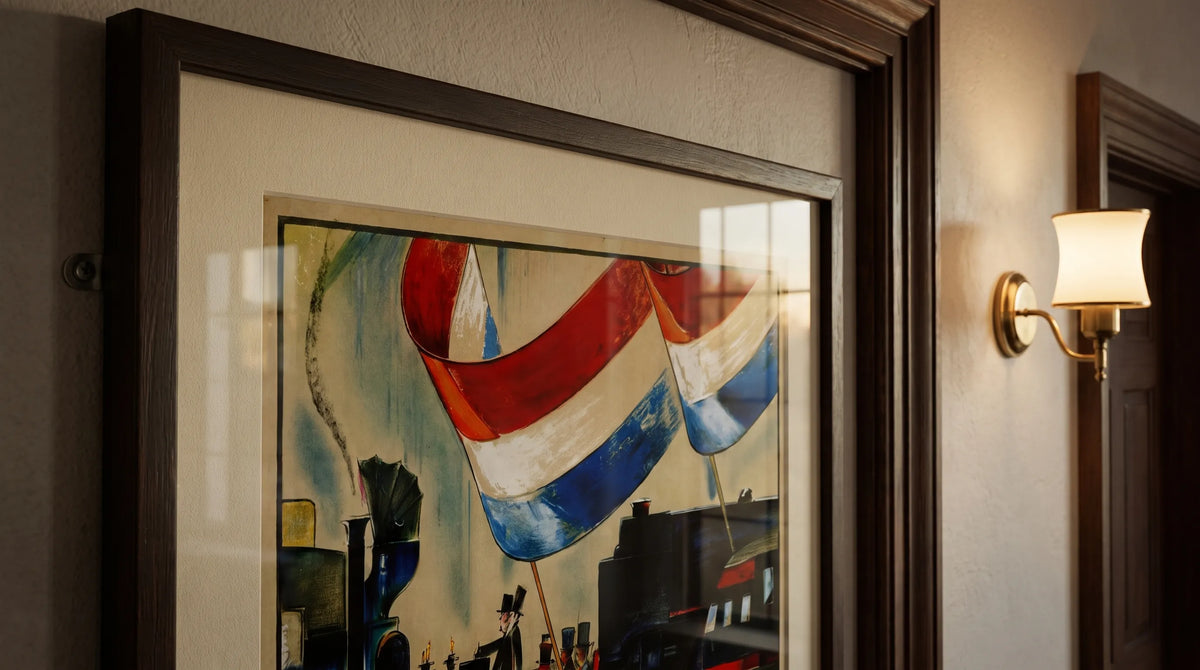
The 1908 Grand Prix de l’Automobile Club de France at Dieppe belongs to the heroic age of motor racing. These were long, demanding road races held before modern safety standards, when drivers battled dust, rough surfaces and fragile machinery. Mercedes driver Christian Lautenschlager won the 1908 race, helping establish Mercedes as a serious force in competition before the First World War.
That context gives early racing art its energy. A scene of a white race car passing grandstands is not only nostalgic. It captures the moment when the automobile became a public spectacle, when engineering, courage and national pride gathered at the roadside. In a modern interior, premium canvas prints based on early motorsport imagery bring movement to a room without needing loud colors or oversized branding.
Bugatti and the beauty of engineering
Bugatti occupies a different emotional space. According to Encyclopaedia Britannica, Ettore Bugatti founded the marque in Molsheim in 1909, and the company became known for combining advanced engineering with exceptional elegance. Classic Bugatti cars from the 1920s and 1930s are admired not only for speed, but for proportion, craftsmanship and almost sculptural mechanical detail.
That is why a Bugatti garage image feels at home in refined interiors. It is automotive, but it also belongs to the language of design: symmetry, shadow, polished surfaces and purposeful form. Black and white treatments are especially versatile because they pair easily with walnut furniture, matte black frames, cream walls and industrial materials.
Touring cars and the promise of freedom
By the 1910s, the car was also becoming a symbol of personal mobility. Touring car imagery from this period often shows open roads, wind, fashionable passengers and a sense of optimism that feels very different from racing posters. These images are cheerful without being childish, which makes them useful in spaces that need warmth.
A golden touring car scene can soften a garage-inspired room or bring charm to a hallway. It also connects beautifully with vintage maps, brass lighting, leather chairs and muted green or ochre walls. For collectors, the pleasure is not only in the vehicle, but in the world around it.
Choosing premium canvas prints for room, light and scale
Before choosing automotive wall art, think about the room as a whole. A moody garage photograph may look exceptional in a home office, but too heavy in a narrow corridor. A bright touring car illustration may bring life to a dining nook, but feel too playful in a minimalist lounge unless balanced with restrained furniture.
| Room or area | Automotive art approach | Design effect |
|---|---|---|
| Living room | One large hero image above the sofa | Creates a confident focal point without clutter |
| Home office | Black and white classic car print or garage scene | Adds focus, heritage and a grown-up enthusiast feel |
| Hallway | Vertical or medium-size vintage motoring artwork | Turns a transitional space into a gallery moment |
| Garage lounge | Racing posters, pit lane imagery or workshop scenes | Builds atmosphere around the automotive theme |
| Bedroom | Softer vintage car illustration with muted color | Keeps the mood calm while showing personality |
A useful rule is to match visual energy to the purpose of the space. Racing art feels dynamic, so it suits offices, studios and entertainment rooms. Garage photography feels grounded and contemplative, which works well near desks or reading chairs. Vintage touring scenes feel welcoming and relaxed, making them easy to place in shared areas.

Interior design principles for automotive canvas art
When premium canvas prints enter a room, the goal is not to make everything match the car. The goal is to let the artwork create rhythm with the furniture, lighting and materials already present. Automotive art is strongest when it feels intentional, not like a poster added at the last minute.
Start with the dominant color in the artwork. A black and white Bugatti image can support a monochrome room, but it can also calm a space with warm wood and tan leather. A yellow touring car print can be echoed subtly through a cushion, book spine or brass lamp rather than repeated everywhere. A red racing car image usually needs breathing room, because red becomes the visual anchor as soon as it enters the room.
Framing and placement change the tone. Canvas wall art can feel relaxed and contemporary when hung unframed, while a framed poster can feel more archival. If you mix formats, keep one detail consistent, such as frame color, print size or theme. That consistency allows different periods of car history to sit together without visual noise.
Lighting is another quiet but important detail. Side lighting brings out canvas texture, while picture lights add a gallery feel above a single hero piece. Avoid placing art where direct sun will strike it for long periods, especially if the space has large windows.
Recommended Poster Pairings
The strongest gallery walls often combine poster prints with premium canvas prints, using one large anchor piece and two to four supporting works. For automotive interiors, the pairing should feel like a conversation across eras rather than a random group of favorite cars.
| Poster | Why it works | Ideal placement |
|---|---|---|
| 1908 Mercedes Grand Prix de l’A.C.F Dieppe Poster | Early racing drama, flags, dust and grandstand energy make this a strong historical anchor. | Above a sofa, workshop bench or reading chair in a motorsport-inspired room. |
| Bugatti in garage - BW | The black and white garage setting adds elegance and contrast, balancing brighter vintage scenes. | Home office, hallway or a minimalist living room with dark accents. |
| 1913 Motor Age Golden Touring Car Poster | Its yellow touring car and period styling bring warmth, optimism and early motoring charm. | Dining nook, entryway or gallery wall with warm wood furniture. |
| Le Mans pits | Modern endurance racing adds a later performance chapter, creating contrast with prewar motoring. | Media room, garage lounge or a wider motorsport wall. |
| Gas stop | The Shelby 427 Cobra subject adds American performance character and a road-trip mood. | Home bar, office or casual living space with leather and metal details. |
A balanced arrangement could place the Dieppe Mercedes artwork in the center, with the Bugatti image on one side and the Motor Age touring car on the other. Add a later racing or performance print beneath or beside them if the wall is wide enough. This creates a timeline: early competition, European elegance, open-road optimism and modern performance culture.
Matching automotive art to interior styles
Minimalist interiors benefit from restraint. Choose one dominant piece, ideally with strong composition and limited color. A black and white Bugatti garage scene can add depth to white walls without disrupting the calm of the room. If you prefer premium canvas prints in a minimalist space, keep the surrounding decor simple so the car remains the visual focus.
Scandinavian interiors work beautifully with vintage automotive subjects because they share an appreciation for clean lines and functional beauty. Pair warm wood, pale walls and soft textiles with early motoring posters that include cream, ochre, muted blue or graphite tones. The result feels nostalgic but still contemporary.
Industrial interiors can handle more mechanical intensity. Exposed brick, steel shelving and concrete floors pair naturally with racing scenes, pit lane views and garage imagery. In this setting, automotive art does not feel themed. It feels connected to the architecture of the space.
Traditional interiors need careful editing. Choose artwork with historic detail, softer colors or archival character. Early Grand Prix and touring car imagery can look excellent above a console table, especially when paired with brass lighting, dark timber and tailored upholstery.
Materials, finish and longevity
Premium wall art depends on more than subject matter. Paper, ink, finish and scale all affect how a piece feels once it is installed. Transit Art offers gallery-quality poster finishes and prints on FSC-certified paper, which matters for buyers who care about both presentation and responsible sourcing.
Canvas and poster formats can also complement each other. A large canvas can act as the focal point, while smaller posters add detail and variety around it. This layered approach works especially well for enthusiasts who want their interiors to tell a broader automotive story rather than celebrate only one model or marque.
If you are building a collection over time, begin with the image you would be happy to see every day. Then choose supporting pieces based on mood, period and color. Premium canvas prints should feel personal first, because the best automotive interiors are built around genuine enthusiasm rather than trend-driven decoration.
Frequently Asked Questions
Are premium canvas prints good for automotive wall art? Yes. Canvas adds texture, reduces glare and gives automotive imagery a more substantial presence on the wall. It works especially well for large racing scenes, garage views and classic car compositions.
Can I mix canvas prints and posters in the same gallery wall? Yes. The easiest way to make the mix feel intentional is to repeat one visual element, such as black frames, similar print sizes, a shared color palette or one consistent automotive theme.
What automotive art works best in a home office? Black and white garage scenes, classic performance cars and motorsport images work well because they add character without becoming too distracting. Choose artwork with strong contrast if the room has neutral walls.
How do I avoid making a room look too themed? Limit the number of automotive objects outside the artwork. Let one or two strong pieces carry the theme, then balance them with quality furniture, books, lighting and natural materials.
Bring automotive heritage into the room
Automotive art has a rare ability to combine design, memory and movement. A Mercedes racing scene can recall the danger of early Grand Prix competition. A Bugatti garage image can express elegance and engineering. A golden touring car can suggest freedom, optimism and the open road.
For enthusiasts, premium canvas prints and carefully chosen poster pairings offer a way to live with those stories every day. The right piece does more than fill a blank wall. It gives a room direction, creates conversation and turns personal passion into interior design with lasting character.