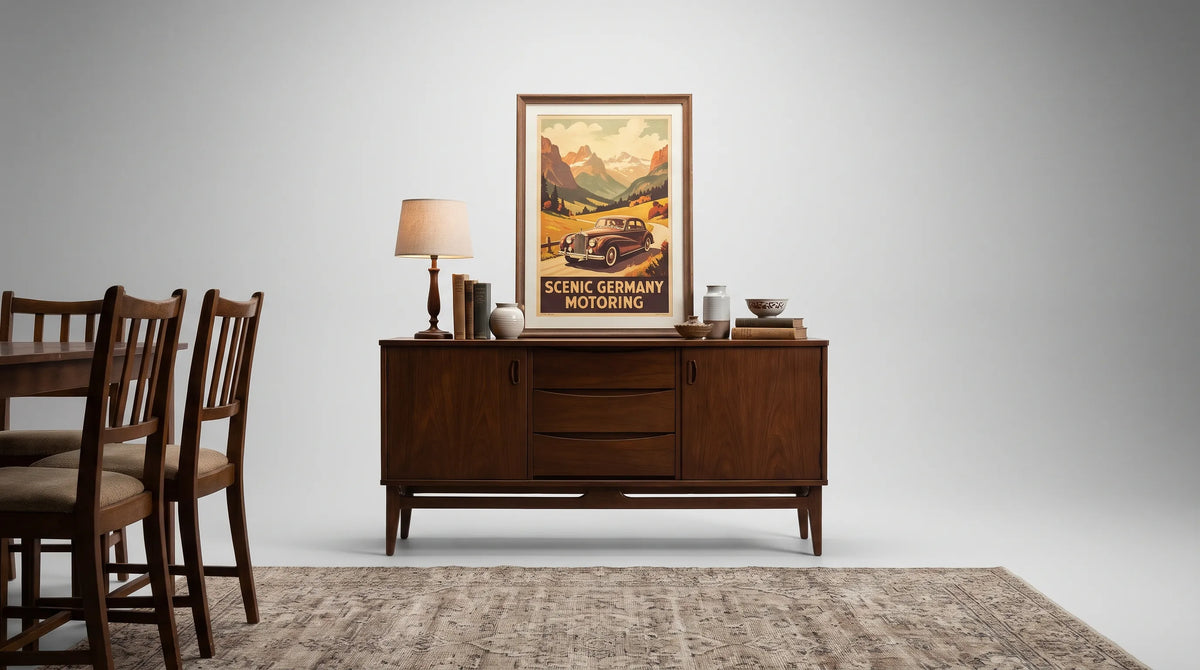
Article: Choosing Modern Wall Art to Complement Chrome Furniture
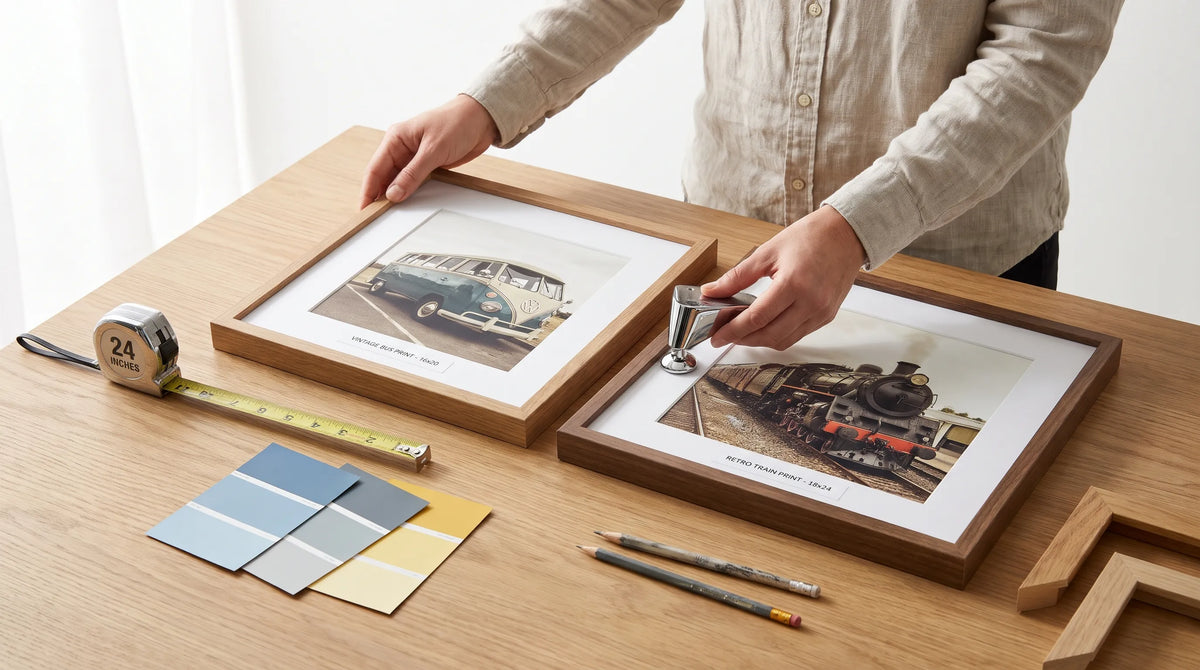
Choosing Modern Wall Art to Complement Chrome Furniture
The right modern wall art can make chrome furniture feel intentional rather than cold. A polished chair frame or reflective console already brings movement into a room, so the artwork needs to provide something different: a clear focal point, a considered palette or a subject with personal meaning. Transport-inspired prints are particularly effective because their curves, structures and engineering details relate naturally to metal furniture without requiring every surface to shine.
Start with the furniture’s shape and the room’s light, then choose artwork that either echoes those qualities or offers a deliberate contrast.
Why Chrome Furniture Works With Transport-Inspired Art
Chrome furniture and transport design share a visual vocabulary: curved tubing, precise junctions, reflective surfaces and forms shaped by practical requirements.
Tubular-steel furniture became central to modernist design during the 1920s, with designers such as Marcel Breuer exploring lightweight, exposed structures. Chrome-plated trim also became a recognizable feature of automotive design, particularly on mid-century cars. Both approaches made metal part of the visual identity rather than something to conceal.
That connection gives vehicle artwork a place beyond the garage. A bicycle’s slender frame can echo a tubular chair, while the long profile of a train can complement a low chrome console. Automotive enthusiasts may enjoy the engineering references; design-focused viewers can appreciate the same image for its proportions and composition.
The strongest combinations do not need identical periods or matching finishes. A vintage vehicle depicted in a restrained print can look entirely at home beside contemporary furniture.
Choose Modern Wall Art by Contrast, Not Matching Metal
Echo One Shape, Not Every Detail
Look for one relationship between the furniture and the artwork. Rounded chrome chair arms might connect with a curved fender or bicycle wheel. A rectangular console may suit an image organized around a strong horizon or a vehicle shown in profile.
Keep the rest of the composition quieter. If the furniture has an intricate wire structure, a visually simple poster gives the eye somewhere to rest. If the furniture is spare and geometric, a more detailed transport image can supply interest.
You are creating a conversation between objects, not assembling a matching set.
Use Color to Control the Temperature
Chrome reflects its surroundings, so its apparent color changes with nearby walls, textiles and lighting. Before choosing artwork, place fabric samples or colored paper beside the furniture and observe the combination in daylight and evening light.
Warm cream, rust and muted red can soften a cool room. Black-and-white imagery creates a sharper contrast, while blue or gray can reinforce an intentionally crisp scheme. These are starting points, not rules: the amount of each color matters as much as the hue.
When choosing modern wall art, repeat one existing accent rather than trying to reproduce the entire room palette. A small red detail in a vehicle print can connect with a cushion without dominating the space.
If your chrome furniture sits alongside oak or walnut, this guide to choosing artwork for warm wood tones offers another useful way to assess the palette.
Get the Scale Right Before Choosing a Print
Measure the artwork’s intended location, including nearby lamps, shelving and doorways. Then measure the furniture beneath it. The relevant dimension is the finished outer frame, not simply the printed image.
As a flexible decorating starting point, try an artwork or grouped arrangement around two-thirds to three-quarters the width of the furniture below it. A 60-inch console might therefore suit an arrangement approximately 40–45 inches wide. This is a proportion to test, not a requirement.
Painter’s tape makes that test inexpensive. Mark the outside dimensions on the wall, then check the outline from the doorway and your usual seat. For a pair of prints, include the space between frames in the total width.
Modern wall art above a reflective console also needs breathing room. Leave enough space between the furniture and frame to separate their outlines, then adjust for anything standing on the console. A tall lamp may require an offset arrangement rather than a centered one.
Avoid sizing artwork from a close-up photograph alone. Chrome furniture can look visually light, but the wall surrounding it may still need a substantial focal point.
Choose a Finish That Does Not Compete With the Chrome
A reflective frame, glossy glazing and polished furniture can create several competing highlights. You do not need to eliminate reflection, but it helps to decide where you want it.
| Format | Visual effect beside chrome | What to check |
|---|---|---|
| Paper poster in a matte black frame | Adds a clear outline without repeating the shine | Outer dimensions, glazing and whether the frame is included |
| Paper poster in a wood frame | Introduces warmth and a contrasting texture | Wood undertone and its relationship to other furniture |
| Canvas wall art | Can provide a softer-looking surface without a glazed front | Edge treatment, depth and supplied hanging hardware |
| Print in a polished metal frame | Repeats the furniture finish deliberately | Reflections from windows and nearby lamps |
Transit Art offers gallery-quality posters printed on FSC-certified paper as well as canvas wall art. Paper certification concerns responsible sourcing; it does not, by itself, establish a print’s resistance to fading. Check individual product information for material, size and presentation details.
For more on the visual difference a canvas can make, explore pairing canvas home decor with modern furniture. Whatever format you choose, avoid direct sunlight and follow the care instructions for the artwork and frame.

Recommended Poster Pairings
These combinations draw on Transit Art’s transport poster categories. The links open subject searches in the shop rather than individual product pages, so you can compare the designs currently listed. Choose the actual pair by its visible colors, orientation and level of detail.
Vintage Car Poster + Bicycle Poster
Pair a vintage car poster with a bicycle poster when you want a transport theme without repeating the same subject.
The connection is structural: wheels, frames and curves appear in both, but the visual weight differs. A car image can provide the more substantial shape, while the bicycle brings a lighter, more open outline. Look for compatible backgrounds or a shared accent color rather than assuming any two vehicle images will work together.
For modern wall art beside chrome dining chairs, this pairing works particularly well when both prints have restrained compositions. Use matching outer frame dimensions if you want order, even when the images themselves have different proportions. Mounting can help reconcile those differences.
Place the pair above a dining-room sideboard or an entryway console. If the car print contains considerably more detail, let it occupy the position that attracts attention first rather than trying to make both pieces equally dominant.
Aircraft Poster + Train Poster
Combine an aircraft poster with a train poster for a home office or living area with long, low furniture.
Both subjects can communicate distance and movement, but they offer different kinds of line. Aircraft wings introduce diagonals or broad horizontal shapes; railway imagery may bring strong perspective or a substantial vehicle profile. Choose images where those directions feel compatible rather than pulling the eye toward opposite edges of the wall.
This pairing suits enthusiasts who appreciate transport engineering across more than one field. It can also work for a shared room where one person prefers aviation and another prefers rail history.
Keep the surrounding objects limited: a desk lamp, a useful tray and the artwork may be enough. Modern wall art feels more considered when its subjects have room to register. Repeating aircraft and train motifs across every accessory would weaken that focus.
Check the Arrangement From Where You Actually Sit
Chrome changes with the viewing angle, and framed artwork can do the same. Before making permanent holes, assess the proposed arrangement from the places where you spend time, not just while standing directly in front of the wall.
From a sofa, check whether a window appears as a bright reflection across the image. At a dining table, look for glare from a pendant light. In a home office, make sure the artwork remains comfortable to view under task lighting.
Also test the room after dark. A print that feels balanced in daylight may look visually heavier under a narrow pool of light. Adjusting the lamp’s position can be more effective than replacing the artwork.
Keep sightlines practical, too. Neither a frame nor its hanging hardware should interfere with a door, a moving chair or the normal route through the room.
Frequently Asked Questions
Should art frames match chrome furniture? No. Matte black and wood frames can provide useful contrast. A chrome or silver-toned frame works when you want repetition, but check that it does not introduce distracting reflections.
Does modern wall art have to depict a contemporary subject? No. A vintage car, bicycle or train can suit a modern interior when the composition, palette and framing work with the room. The age of the subject does not determine the overall effect.
Is one large print better than a pair? One large print creates a single focal point and usually requires fewer visual decisions. A pair allows a connection between subjects. Choose according to the available wall width and how much detail the room already contains.
Can I mix posters and canvas beside chrome furniture? Yes. Give them a shared color, subject or alignment so the difference in surface feels intentional. You do not need identical formats throughout the room.
Bring the Room Together With One Clear Connection
Chrome furniture already contributes light, line and reflection. Let the artwork add the element the room is missing, whether that is warmth, a stronger focal point or a reference to a favorite form of transport.
Explore Transit Art’s transport-inspired artwork with your wall measurements and a room photograph at hand. Choose the piece that works with both your surroundings and your interests, then give it enough space to be seen.